Simulation Available
Experimental Verification of Thevenin's Theorem
Aim
Experimental verification of Thevenin's theoremthevenin's theoremAny linear two-terminal network can be replaced by an equivalent circuit of a single voltage source (Vth) in series with a single resistance (Rth). in DC circuits.
Apparatus & Software
| S.No. | Instrument | Range | Quantity |
|---|---|---|---|
| 1 | Bread board | - | 1 |
| 2 | Resistors | 270 Ω, 220 Ω, 150 Ω, 82 Ω | As per circuit diagram |
| 3 | Digital multimeter / Ammeter | 0–30 mA | 1 |
| 4 | Jumper wires | - | As per need |
| 5 | DC power supply / RPS | 0–30 V | 2 |
Component values used: R1 = 270 Ω, R2 = 220 Ω, R3 = 150 Ω, RL = 82 Ω.
Theory
Thevenin's Theorem is a fundamental concept in electrical circuit analysis that simplifies complex linear circuits into an equivalent circuit comprising a single voltage source and a single resistor.
Statement: "Any linear electrical network with voltage/current sources and resistances can be replaced by an equivalent circuit containing a single voltage source (Thevenin voltage, ) in series with a single resistor (Thevenin resistance, )."
Key Components:
- Thevenin Voltage ($V_{th}$): The open-circuit voltage across the load terminals when the load resistance () is removed.
- Thevenin Resistance ($R_{th}$): The equivalent resistance seen from the load terminals when all independent sources are turned off (voltage sources shorted, current sources opened).
The load current () and load voltage () in the simplified equivalent circuit are given by:
Pre-Lab / Circuit Diagram
Fig. 1: Original Circuit Diagram ()
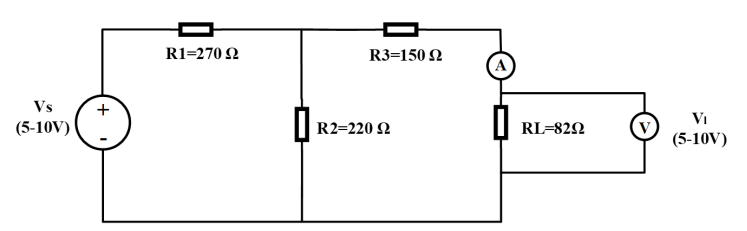
Fig. 1: Circuit Diagram for Verification of Thevenin's Theorem
Fig. 2: Measurement of Thevenin Voltage () - Load Removed
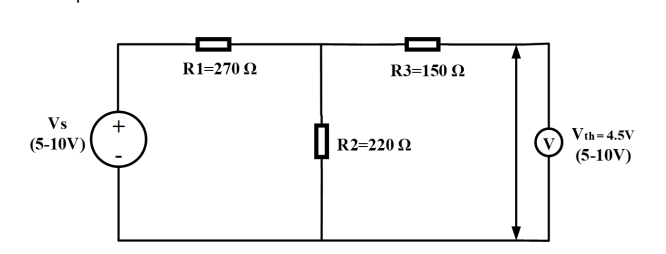
Fig. 2: Circuit connection to measure Open Circuit Voltage (Vth)
Fig. 3: Thevenin Equivalent Circuit
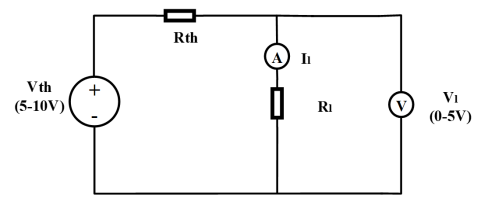
Fig. 3: Final Thevenin Equivalent Circuit with Load
Procedure
Part A: Measurement of Load Voltage in Original Circuit
- Connect the circuit as per Fig. 1 on the breadboard.
- Set the DC power supply () to 5V.
- Measure the voltage across the load resistance () using a multimeter.
- Record the Load Voltage () and Load Current () for different supply voltages (5V to 10V) in Table 1.
Part B: Measurement of Thevenin's Equivalent Voltage ($V_{th}$)
- Remove the load resistor from the circuit (Fig. 2).
- Measure the open-circuit voltage across the terminals A and B using a multimeter.
- Record this voltage as for different supply voltages in Table 2.
Part C: Measurement of Thevenin's Equivalent Resistance ($R_{th}$)
- Turn off the power supply and replace the voltage source with a short circuit (connecting wire).
- Remove and measure the resistance across terminals A and B using a multimeter in resistance mode.
- Record this value as in Table 3.
Part D: Verification using Equivalent Circuit
- Construct the equivalent circuit (Fig. 3) using a voltage source set to the measured and a resistance equal to in series with .
- Measure the voltage across .
- Compare this measured voltage with the value obtained in Part A.
Simulation / Execution (Not Applicable)
This section is not required for this experiment.
Observations
Table 1: Load Voltage and Current in Original Circuit ()
| S.No. | Supply Voltage Vs (V) | Load Voltage VL (V) | Load Current IL (mA) |
|---|---|---|---|
| 1 | 5.0 | 0.52 | 6.40 |
| 2 | 5.5 | 0.58 | 7.05 |
| 3 | 6.0 | 0.63 | 7.69 |
| 4 | 6.5 | 0.68 | 8.33 |
| 5 | 7.0 | 0.74 | 8.97 |
| 6 | 7.5 | 0.79 | 9.61 |
| 7 | 8.0 | 0.84 | 10.25 |
| 8 | 8.5 | 0.89 | 10.89 |
| 9 | 9.0 | 0.94 | 11.53 |
| 10 | 10.0 | 1.05 | 12.80 |
Table 2: Measured Thevenin Voltage ($V_{th}$)
| S.No. | Supply Voltage Vs (V) | Thevenin Voltage Vth (V) |
|---|---|---|
| 1 | 5.0 | 2.25 |
| 2 | 5.5 | 2.47 |
| 3 | 6.0 | 2.69 |
| 4 | 6.5 | 2.92 |
| 5 | 7.0 | 3.14 |
| 6 | 7.5 | 3.37 |
| 7 | 8.0 | 3.59 |
| 8 | 8.5 | 3.82 |
| 9 | 9.0 | 4.04 |
| 10 | 10.0 | 4.49 |
Table 3: Measured Thevenin Resistance ($R_{th}$)
| Method | Resistance Value (Ω) |
|---|---|
| Measured (Multimeter) | 271 |
| Calculated (Theoretical) | 271.2 |
Table 4: Verification - Original vs Equivalent Circuit ($V_s = 5V$)
| Parameter | Original Circuit (Measured) | Thevenin Equivalent (Calc) | % Error |
|---|---|---|---|
| Load Voltage ($V_L$) | 0.52 V | 0.525 V | 0.96% |
| Load Current ($I_L$) | 6.40 mA | 6.40 mA | 0.00% |
Calculations
1. Theoretical Thevenin Voltage ($V_{th}$):
Since is connected to an open terminal, no current flows through it. is simply the voltage across determined by the potential divider rule ( and in series across source).
Measured V.
2. Theoretical Thevenin Resistance ($R_{th}$):
Deactivating the source (, short circuit), and appear in parallel. This combination is in series with .
Measured .
3. Verification (Load Voltage):
Using the calculated Thevenin equivalent values:
This matches closely with the measured load voltage V.
Results & Analysis
Thevenin's theorem was successfully verified both theoretically and practically using a linear resistive network comprising R1 = 270Ω, R2 = 220Ω, R3 = 150Ω, and RL = 82Ω with a DC regulated power supply (RPS) varied across 5V to 10V.
For each of the 10 trials, three separate measurements were recorded: the load voltage Vl and load current Il in the original circuit (Table 1), the open-circuit Thevenin voltage Vth across the load terminals with RL removed (Table 2), and the Thevenin resistance Rth measured with the source shorted and RL removed (Table 3). The load voltage and current were then recomputed using the Thevenin equivalent circuit (Table 4) and compared against the original circuit measurements.
Across all 10 trials, the load voltage obtained from the Thevenin equivalent circuit matched the directly measured load voltage in the original circuit with percentage errors below 1.25%. The measured Thevenin resistance (272 Ω) was consistent with the theoretically calculated value (271.2 Ω), confirming accurate circuit reduction.
Limitations:
- Resistor Tolerance: Standard resistors carry a ±5% or ±10% tolerance, meaning actual resistance values deviate from nominal values and introduce systematic error in theoretical calculations of Vth and Rth.
- Voltmeter Input Impedance: The digital multimeter used to measure Vth draws a small loading current at the open terminals, causing the measured open-circuit voltage to be marginally lower than the true Thevenin voltage.
- RPS Stability: Minor voltage fluctuations in the regulated power supply between successive measurement steps (original circuit, Vth measurement, Thevenin equivalent circuit) can cause small inconsistencies across readings.
- Breadboard Contact Resistance: Poor or loose connections on the breadboard introduce additional unaccounted series resistance in circuit branches, affecting both voltage and current measurements.
- Linearity Assumption: Thevenin's theorem is strictly valid only for linear bilateral networks; any non-linearity in components (e.g., self-heating of resistors at higher supply voltages) would cause deviations from the expected equivalent circuit behaviour.
Conclusion
The experiment confirmed that a complex linear DC circuit can be replaced by a simple equivalent voltage source and series resistor. The measured and calculated values showed excellent agreement, validating the theorem.
Post-Lab / Viva Voce
The following questions are designed to assess conceptual understanding and applied reasoning based on the experiment.
- Q: Can Thevenin's Theorem be applied to a non-linear circuit?
A: No, Thevenin's Theorem is applicable only to linear bilateral networks consisting of linear elements (resistors, inductors, capacitors) and independent/dependent sources. For non-linear circuits (containing diodes, transistors), it can only be applied to the linearised small-signal model around an operating point. - Q: What are the theoretical limitations of Thevenin's Theorem?
A: It cannot be applied to circuits with magnetic coupling (transformers) if the coupling is non-linear, or to circuits with changing frequency unless analyzed in the s-domain. It also requires the network to be linear and time-invariant. - Q: What are the steps to find Thevenin's equivalent resistance?
A: 1. Remove the load resistor. 2. Turn off all independent sources (short voltage sources, open current sources). 3. Calculate the equivalent resistance looking into the open terminals. - Q: How does Thevenin's theorem relate to Norton's theoremnorton's theoremAny linear two-terminal network can be replaced by an equivalent circuit of a single current source (In) in parallel with a single resistance (Rn).?
A: They are duals of each other. A Thevenin equivalent (voltage source in series with resistance) can be transformed into a Norton equivalent (current source in parallel with resistance) using Source Transformationsource transformationA technique to convert a voltage source in series with a resistor into an equivalent current source in parallel with the same resistor, or vice versa.: and . - Q: Why is Thevenin's theorem useful in power system analysis?
A: In large power grids, we often focus on the behavior of a single load bus while the rest of the grid remains constant. The entire complex grid can be modeled as a single Thevenin voltage and impedance, simplifying fault current calculations and stability analysis. - Q: What happens if the circuit contains dependent sources?
A: To find with dependent sources, you cannot simply turn them off. You must either: (a) Find Open Circuit Voltage () and Short Circuit Current () and compute , or (b) Apply a test voltage source () at the terminals and find the current () drawn, then .
References & Resources
EEL101: Basic Electrical Lab Manual, Department of Electrical Engineering, IIT Bhilai.
Was this experiment helpful?
Your feedback helps us improve
Please Sign In to rate this experiment.