Time Domain Analysis of First, Second and Third Order Systems
Aim
- To analyze the time response of first, second, and third order LTI systems.
- To study impulse, step, ramp, and parabolic responses.
- To evaluate system stability and time domain specifications.
- To verify theoretical results using MATLAB simulations.
Apparatus & Software
| Sl. No. | Apparatus / Software | Technical Specification | Quantities |
|---|---|---|---|
| 1 | MATLAB | R2023 or compatible, with Control System Toolbox | 1 |
Theory
- Impulse Input: Represents a sudden shock or disturbance applied to the system. r(t) = δ(t)
- Step Input: Represents a sudden change in position or reference value. r(t) = u(t)
- Ramp Input: Represents a constant velocity input. r(t) = t·u(t)
- Parabolic Input: Represents a constant acceleration input. r(t) = (t²/2)·u(t)
- Delay Time (td): Time to reach 50% of final value. td ≈ 0.693τ
- Rise Time (tr): Time to rise from 10% to 90% of final value. tr ≈ 2.2τ
- Settling Time (ts): Time to remain within ±2% of final value. ts ≈ 4τ
- Steady-State Value: lim(t→∞) c(t) = K
- Steady-State Error (ess): ess = lim(t→∞) [r(t) − c(t)]
- Undamped (ζ = 0): Sustained oscillations with constant amplitude.
- Underdamped (0 < ζ < 1): Oscillations with exponentially decaying amplitude.
- Critically Damped (ζ = 1): Fastest return to steady-state without oscillations.
- Overdamped (ζ > 1): Returns to steady-state without oscillations but more slowly.
Pre-Lab / Circuit Diagram (Not Applicable)
This section is not required for this experiment.
Procedure
- Define the transfer function of each system using MATLAB's tf() function.
- Apply impulse, step, ramp, and parabolic inputs to each system.
- Plot the time responses using MATLAB's impulse(), step(), and lsim() functions.
- Extract time domain specifications (rise timerise timeThe time required for a system's transient response to rise from 10% to 90% (typically for overdamped systems) or 0% to 100% (for underdamped systems) of its final steady-state value., peak time, settling timesettling timeThe time required for a system's response curve to reach and permanently stay within a specified tolerance band (usually 2% or 5%) of the final steady-state value., maximum overshootmaximum overshootThe maximum peak value of the response curve measured from the desired steady-state value, typically expressed as a percentage. It indicates the relative stability of the system., steady-state value) using MATLAB's stepinfo() function.
- Identify system parameters (K, τ for first order; ωn, ζ for second order) by comparing with standard forms.
- For the third order system, identify dominant poles and compare with second order approximation.
- Verify the MATLAB results against theoretical calculations.
- System 1 (First Order): G(s) = 3 / (0.6s + 1)
- System 2 (Second Order — Undamped): G(s) = 121 / (s² + 121)
- System 3 (Second Order — UnderdampedunderdampedA system response that oscillates with decreasing amplitude before reaching steady state. Occurs when damping is less than the critical value (ζ < 1).): G(s) = 144 / (s² + 19.2s + 144)
- System 4 (Second Order — Critically Dampedcritically dampedA system response that returns to steady state as fast as possible without oscillating. Occurs when the damping ratio exactly equals one (ζ = 1).): G(s) = 144 / (s² + 24s + 144)
- System 5 (Second Order — OverdampedoverdampedA system response that returns to steady state slowly without oscillating. Occurs when damping exceeds the critical value (ζ > 1).): G(s) = 144 / (s² + 72s + 144)
- System 6 (Third Order): G(s) = 1 / [(s + 36)(s² + 14s + 196)]
Simulation / Execution
Observations
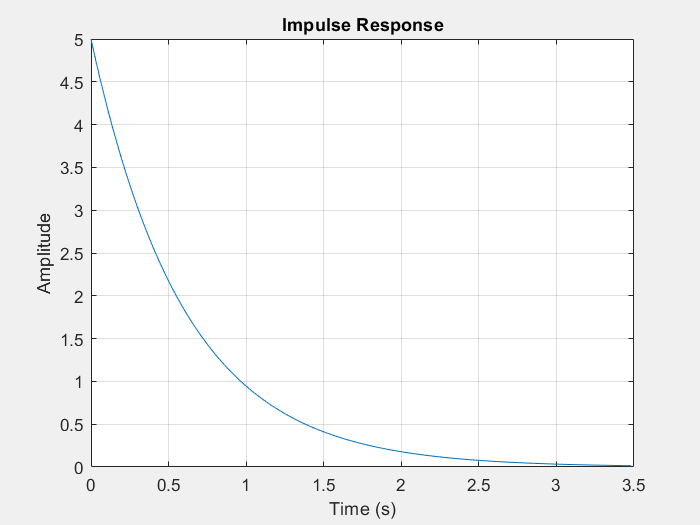
Impulse Response for first order system
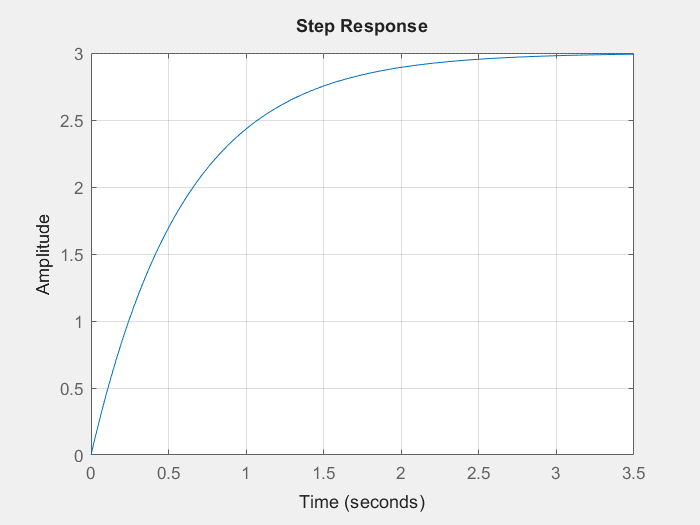
Step Response for first order system
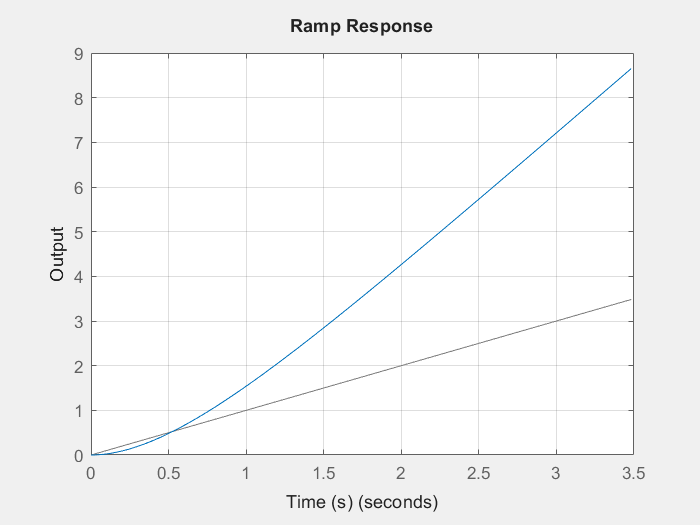
Ramp Response for first order system
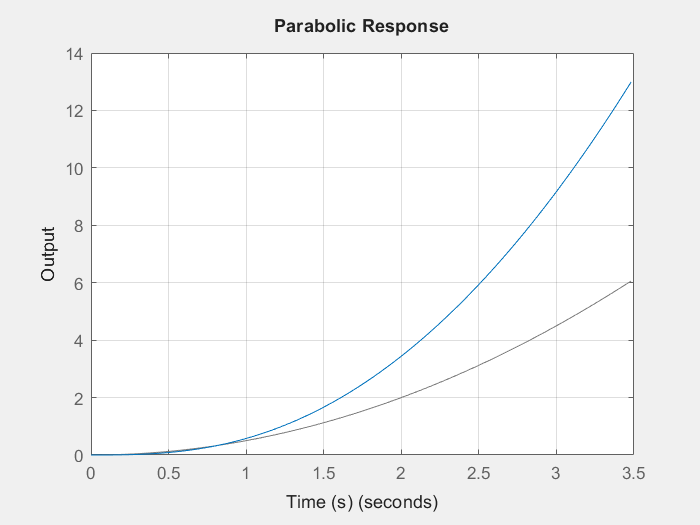
Parabolic Response for first order system
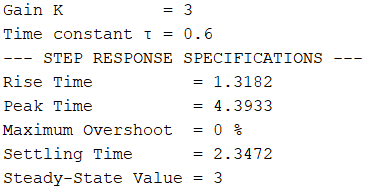
Step Response Specifications for first order system
| Parameter | Value |
|---|---|
| Gain K | 3 |
| Time Constant τ | 0.6 |
| Rise Time | 1.3182 s |
| Peak Time | 4.3933 s |
| Maximum Overshoot | 0 % |
| Settling Time | 2.3472 s |
| Steady-State Value | 3 |
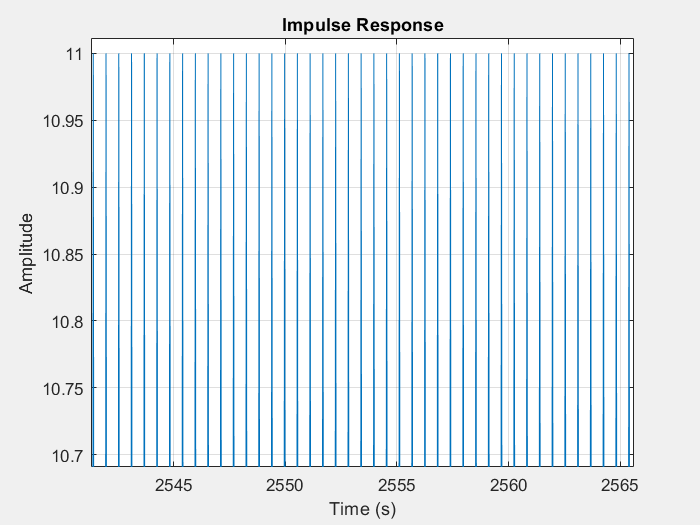
Impulse Response for undamped second order system
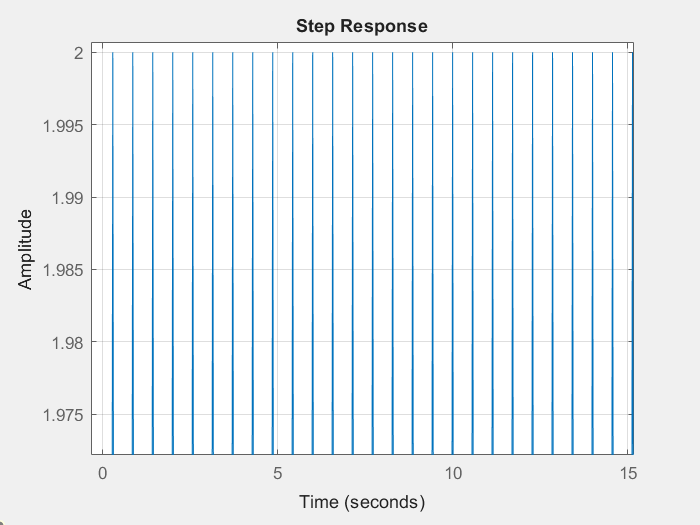
Step Response for undamped second order system
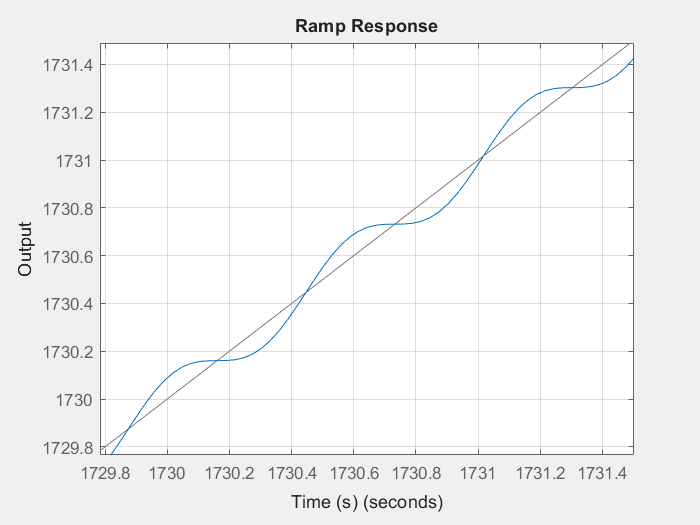
Ramp Response for undamped second order system
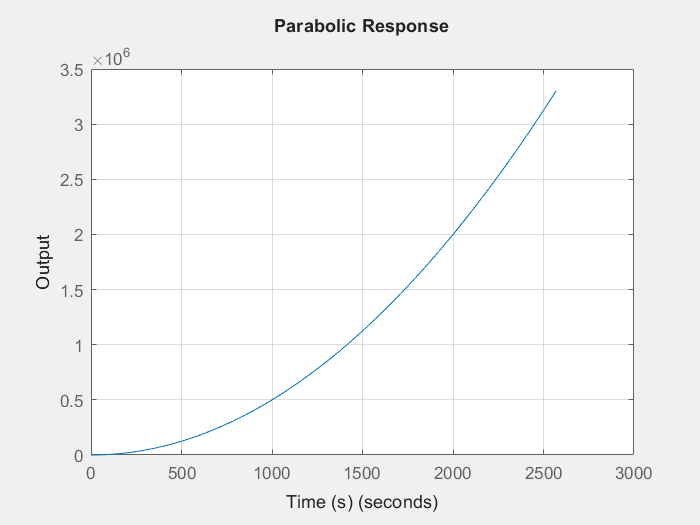
Parabolic Response for undamped second order system
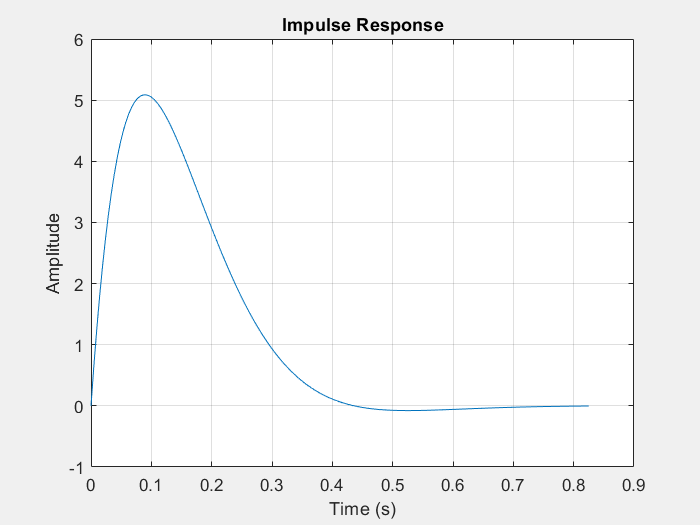
Impulse Response for underdamped second order system
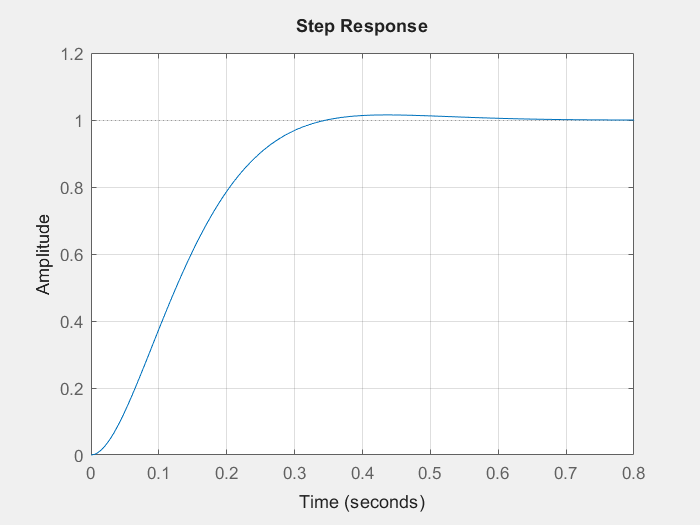
Step Response for underdamped second order system
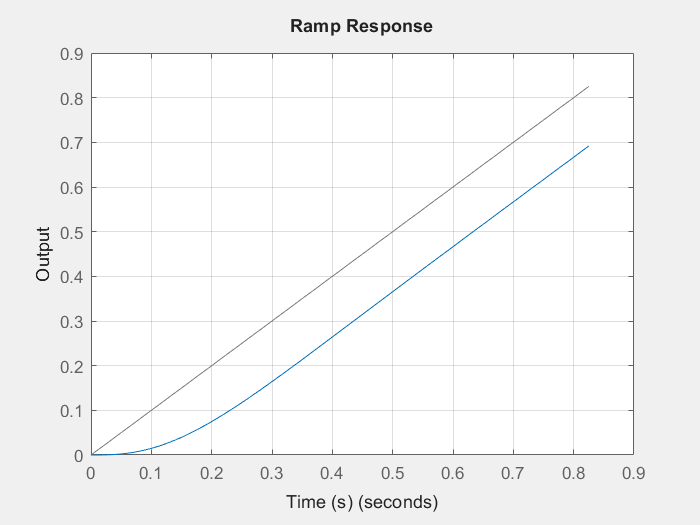
Ramp Response for underdamped second order system
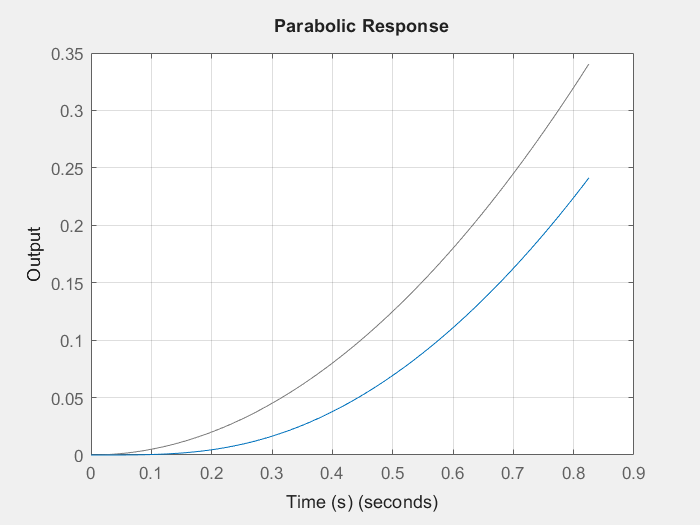
Parabolic Response for underdamped second order system
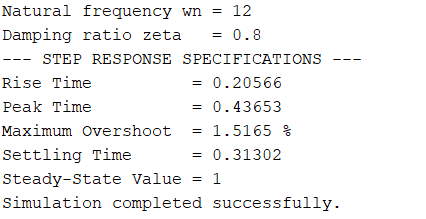
Step Response Specifications for underdamped system
| Parameter | Value |
|---|---|
| Natural Frequency ωn | 12 |
| Damping Ratio ζ | 0.8 |
| Rise Time | 0.20566 s |
| Peak Time | 0.43653 s |
| Maximum Overshoot | 1.5165 % |
| Settling Time | 0.31302 s |
| Steady-State Value | 1 |
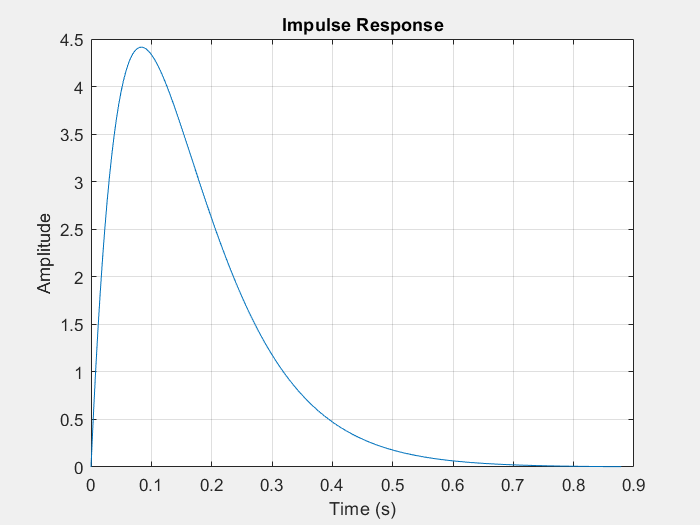
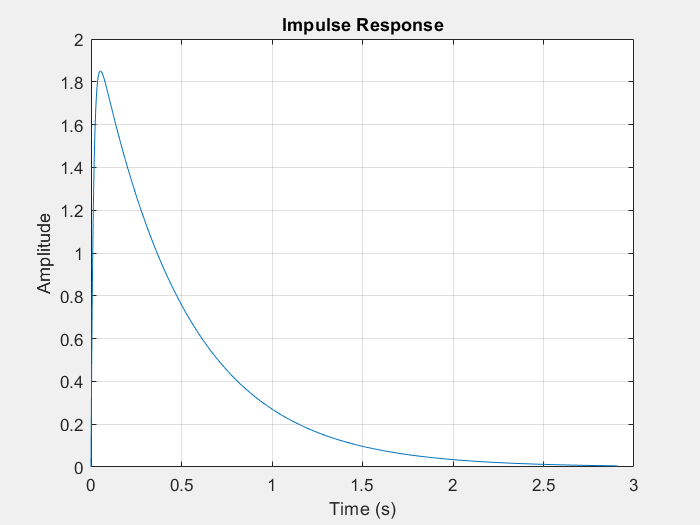
Impulse Response for critically damped second order system
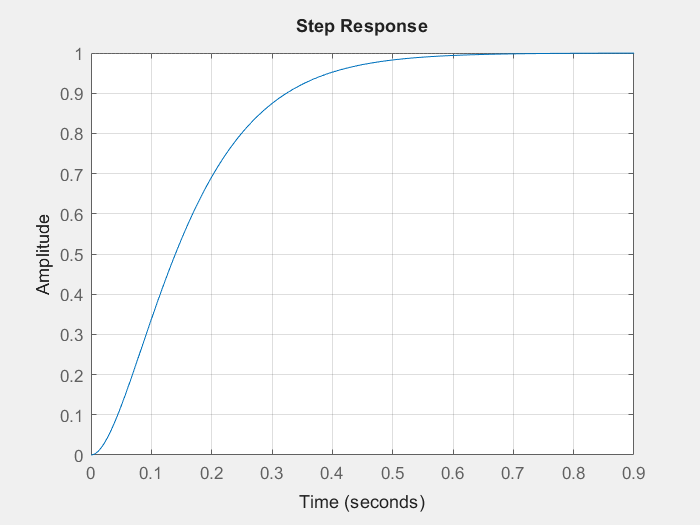
Step Response for critically damped second order system
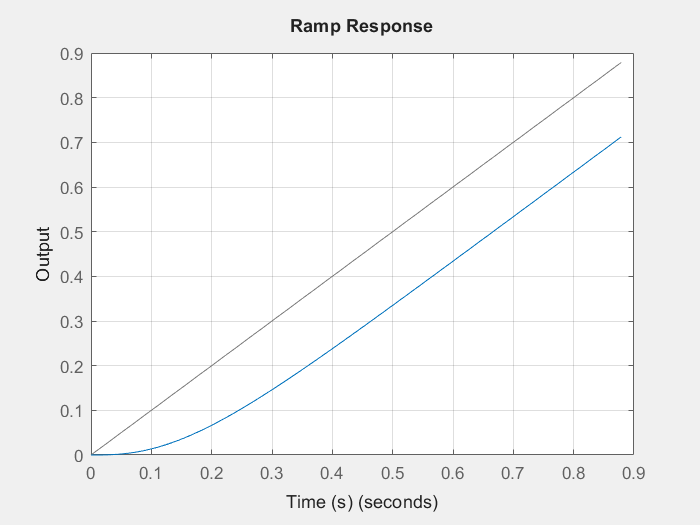
Ramp Response for critically damped second order system
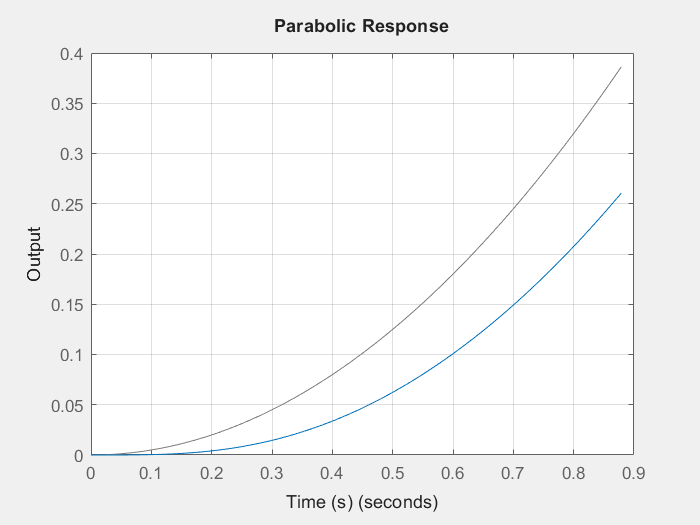
Parabolic Response for critically damped second order system
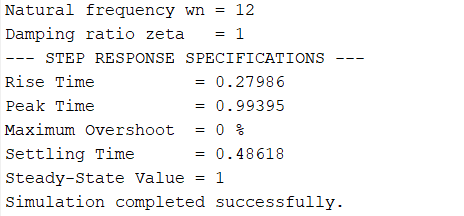
Step Response Specifications for critically damped system
| Parameter | Value |
|---|---|
| Natural Frequency ωn | 12 |
| Damping Ratio ζ | 1 |
| Rise Time | 0.27986 s |
| Peak Time | 0.99395 s |
| Maximum Overshoot | 0 % |
| Settling Time | 0.48618 s |
| Steady-State Value | 1 |
Impulse Response for overdamped second order system
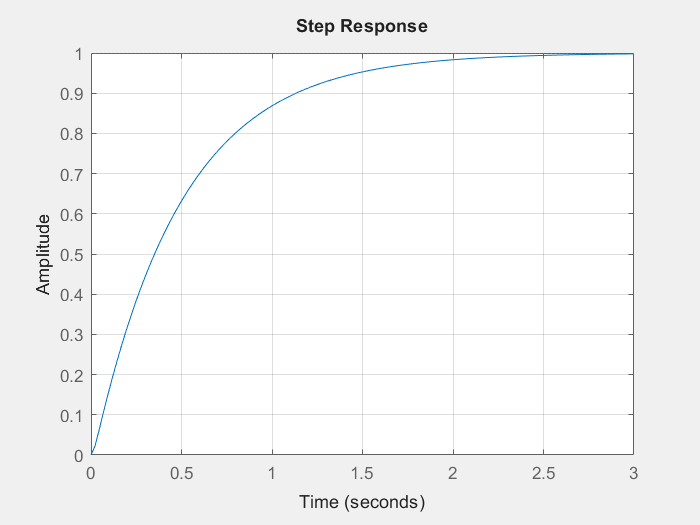
Step Response for overdamped second order system
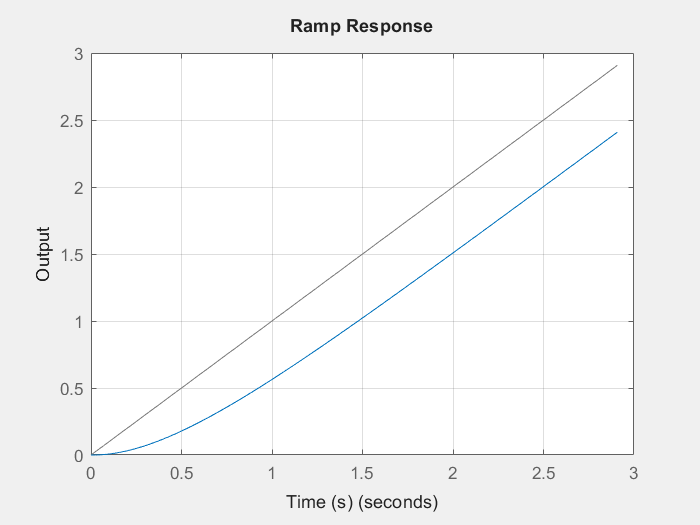
Ramp Response for overdamped second order system
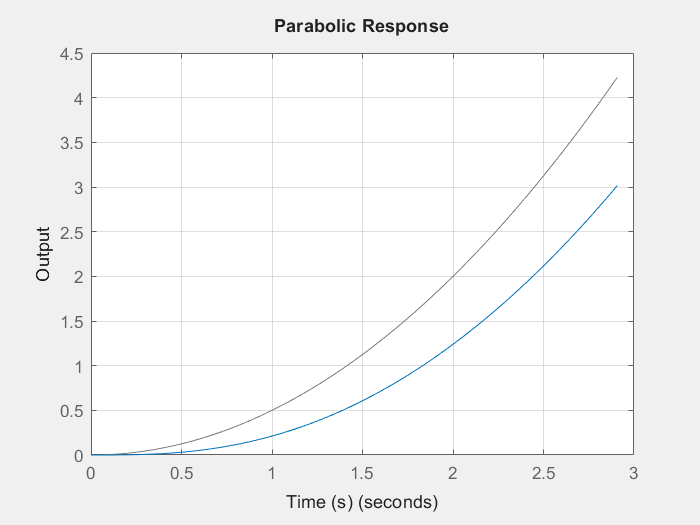
Parabolic Response for overdamped second order system
| Parameter | Value |
|---|---|
| Natural Frequency ωn | 12 |
| Damping Ratio ζ | 3 |
| Rise Time | 1.0675 s |
| Peak Time | 3.5564 s |
| Maximum Overshoot | 0 % |
| Settling Time | 1.9147 s |
| Steady-State Value | 1 |
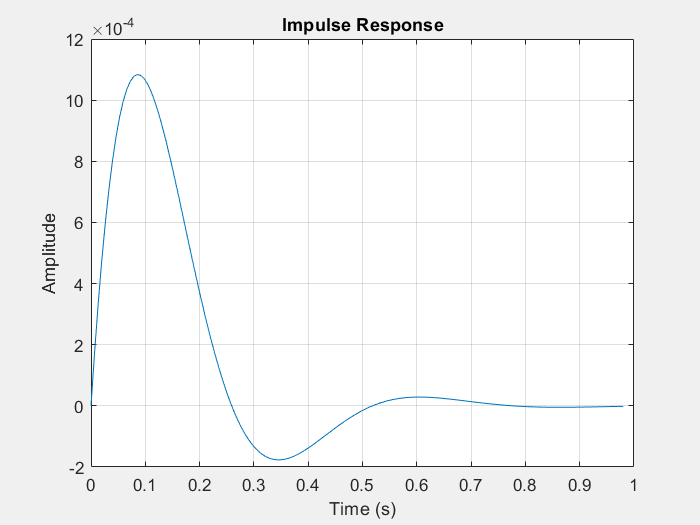
Impulse Response for third order LTI system
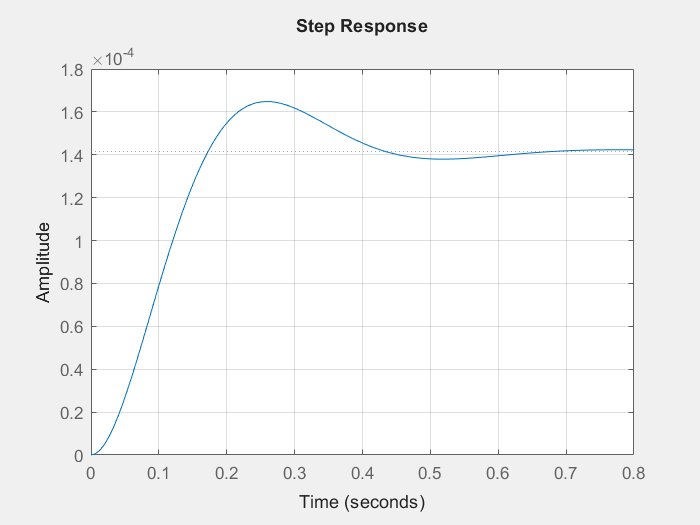
Step Response for third order LTI system
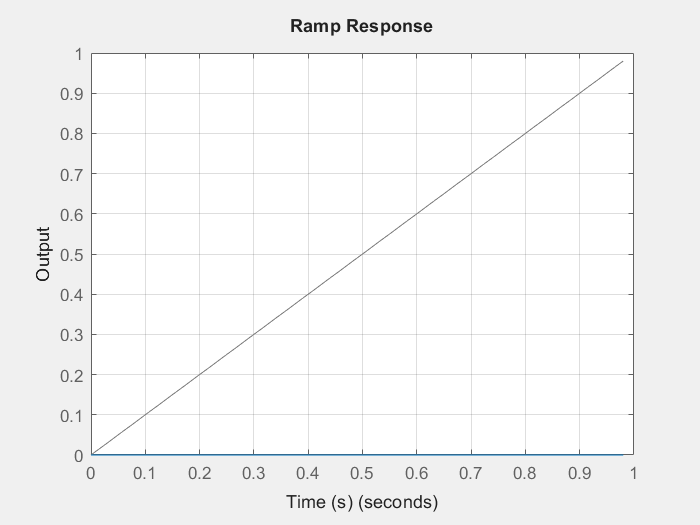
Ramp Response for third order LTI system
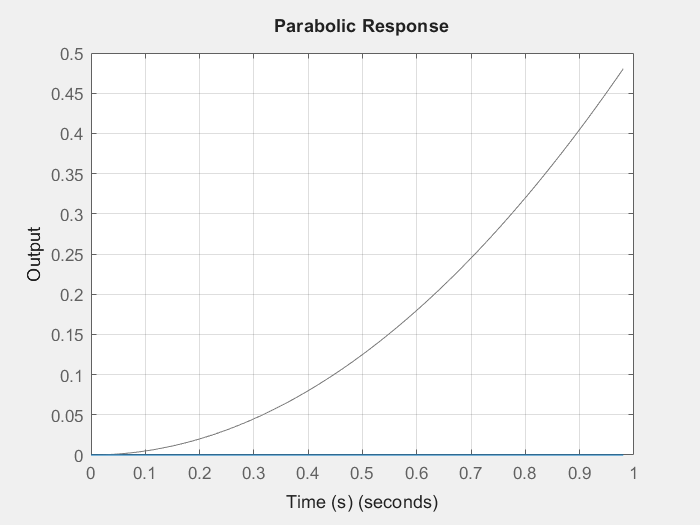
Parabolic Response for third order LTI system
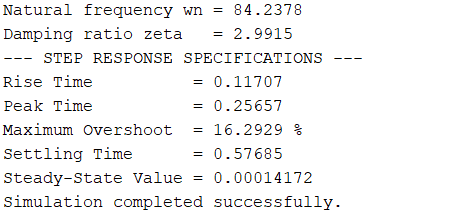
Step Response Specifications for third order system
| Parameter | Value |
|---|---|
| Natural Frequency ωn (dominant) | 84.2378 |
| Damping Ratio ζ (dominant) | 2.9915 |
| Rise Time | 0.11707 s |
| Peak Time | 0.25657 s |
| Maximum Overshoot | 16.2929 % |
| Settling Time | 0.57685 s |
| Steady-State Value | 0.00014172 |
Calculations
Results & Analysis
| System | Transfer Function | Type | ωn / K | ζ / τ | Rise Time (s) | Peak Time (s) | Max Overshoot (%) | Settling Time (s) | SS Value |
|---|---|---|---|---|---|---|---|---|---|
| System 1 | 3 / (0.6s+1) | 1st Order | K=3 | τ=0.6 | 1.3182 | 4.3933 | 0 | 2.3472 | 3 |
| System 2 | 121 / (s²+121) | 2nd — Undamped | 11 | 0 | — | — | — | ∞ | 1 (oscillating) |
| System 3 | 144 / (s²+19.2s+144) | 2nd — Underdamped | 12 | 0.8 | 0.20566 | 0.43653 | 1.5165 | 0.31302 | 1 |
| System 4 | 144 / (s²+24s+144) | 2nd — Critically Damped | 12 | 1 | 0.27986 | 0.99395 | 0 | 0.48618 | 1 |
| System 5 | 144 / (s²+72s+144) | 2nd — Overdamped | 12 | 3 | 1.0675 | 3.5564 | 0 | 1.9147 | 1 |
| System 6 | 1 / [(s+36)(s²+14s+196)] | 3rd Order | 84.24 | 2.99 | 0.11707 | 0.25657 | 16.2929 | 0.57685 | 0.000142 |
Conclusion
Post-Lab / Viva Voce
References & Resources (Not Applicable)
This section is not required for this experiment.
Was this experiment helpful?
Your feedback helps us improve
Please Sign In to rate this experiment.